Decades of Change

For more than eight decades, Judith McDaniel has lived through some of the most transformative moments in modern American history. As a writer, teacher, feminist and lesbian, activist, and lifelong observer, her journey has unfolded alongside the movements that reshaped the nation. Explore the events that influenced her life, informed her work, and continue to resonate throughout in her forthcoming memoir from New Village Press.
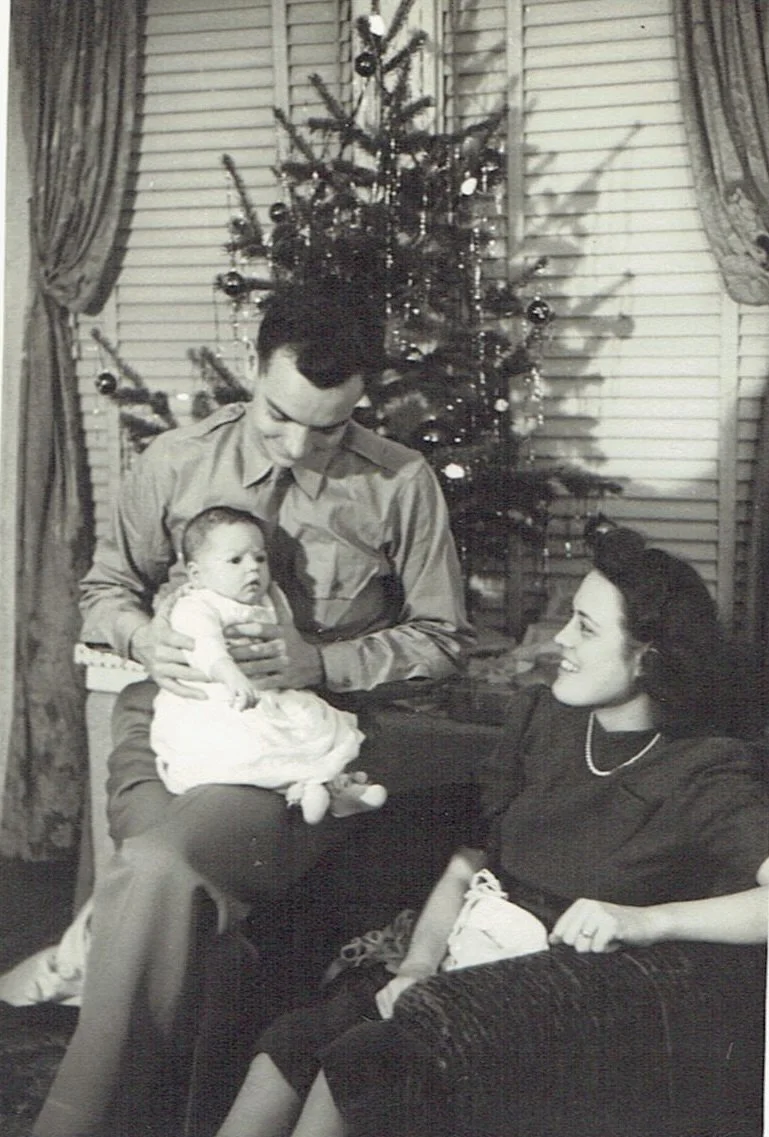
A Wartime Baby
1940s
Born in 1943 in Fort Sam Houston military hospital in San Antonio, Texas, Judith met her father for the first time in 1946, when he returned from WWII. A Colonel in the Air Force, his job took Judith, her mother, and her younger sister from Louisiana to Germany, where Judith attended high schools in Kaiserslautern and Wiesbaden. This itinerant lifestyle informed Judith’s understanding of difference, even within the strict military culture in which she was raised. While the language remained the same, cultural and regional differences shifted with each posting. Adapting to differences was an early and lifelong learning.
Photo: Judith with her parents.
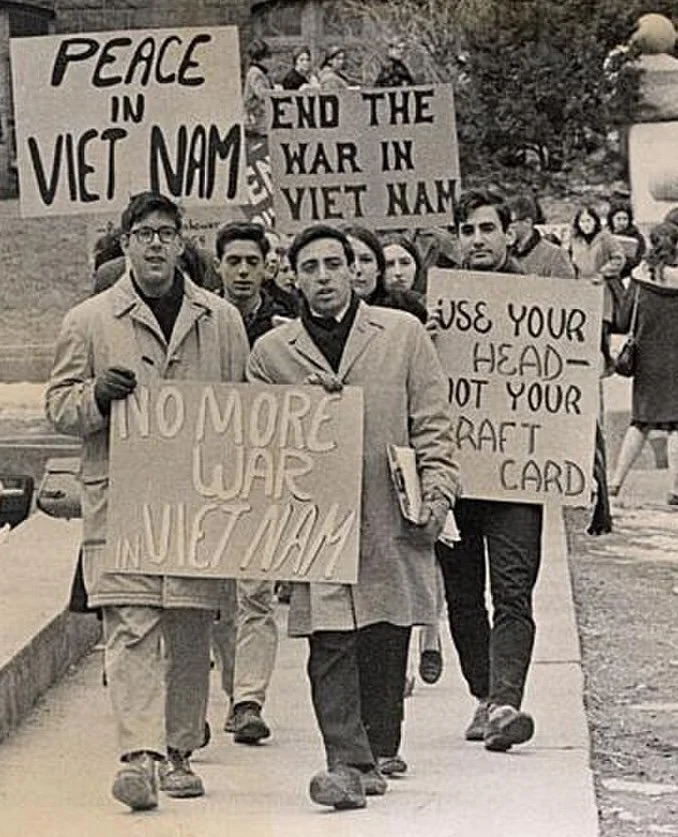
1960s
Judith’s education introduced her to the activism that would come to define her life. At Antioch College, her first religion class challenged her to think critically about the choices we make and how we navigate life’s difficult questions. Her pursuit of answers to these questions brought her to Quakerism, active involvement in the Civil Rights and anti-war movements, and a lifelong commitment to social justice. Her education also took her far beyond Antioch, from Exeter University in England to a cooperative farm in East Germany and, eventually, to graduate study in the United States, where she earned a doctorate in English Literature. She went on to teach at Middlebury College and Skidmore College, where her writing and teaching on feminism and lesbian-focused issues came with serious professional consequences.
Photo: Student protesters marching at the University of Wisconsin-Madison. Source.
Civil Rights, Vietnam, and Becoming an Activist

Behind the Iron Curtain: Working in East Germany
1965
Judith spent her fourth year of college at Exeter University in England, where she joined an English Quaker group and journeyed to East Germany. She lived and worked on cooperative farms for a semester with university students from Leipzig and Dresden who had lived their entire lives under communism and who, as she write in her memoir, “taught me far more than how to hoe weeds and stack barley…I learned the difference between a system that fostered cooperation and a system that demanded competition.” Here, Judith learned the flaws of strict binary narratives, and the advantages of being able to hold multiple truths at once.
Photo credit: Judith McDaniel
Feminism, Lesbianism, and Finding Her Voice
1970s - 1980s
Shortly after she began teaching at Middlebury College in 1973, Judith was asked to advise a women’s group on campus, and after she agreed, she was immediately given a terminal contract: her two-year position would not be renewed. At a time when feminism was a nearly universally pejorative word, Judith began to embrace it, and to ask what it means to be a feminist. How do individuals define it? How does the world define it?
This journey led her to Sagaris in 1975, a five-week feminist conference in Vermont, where she met feminist leaders like Mary Daly, Rita Mae Brown, Charlotte Bunch, Karen Clark, and others. There, she learned more about the movement and how it intersected with racism and classism, made lifelong friends, and came out as a lesbian.
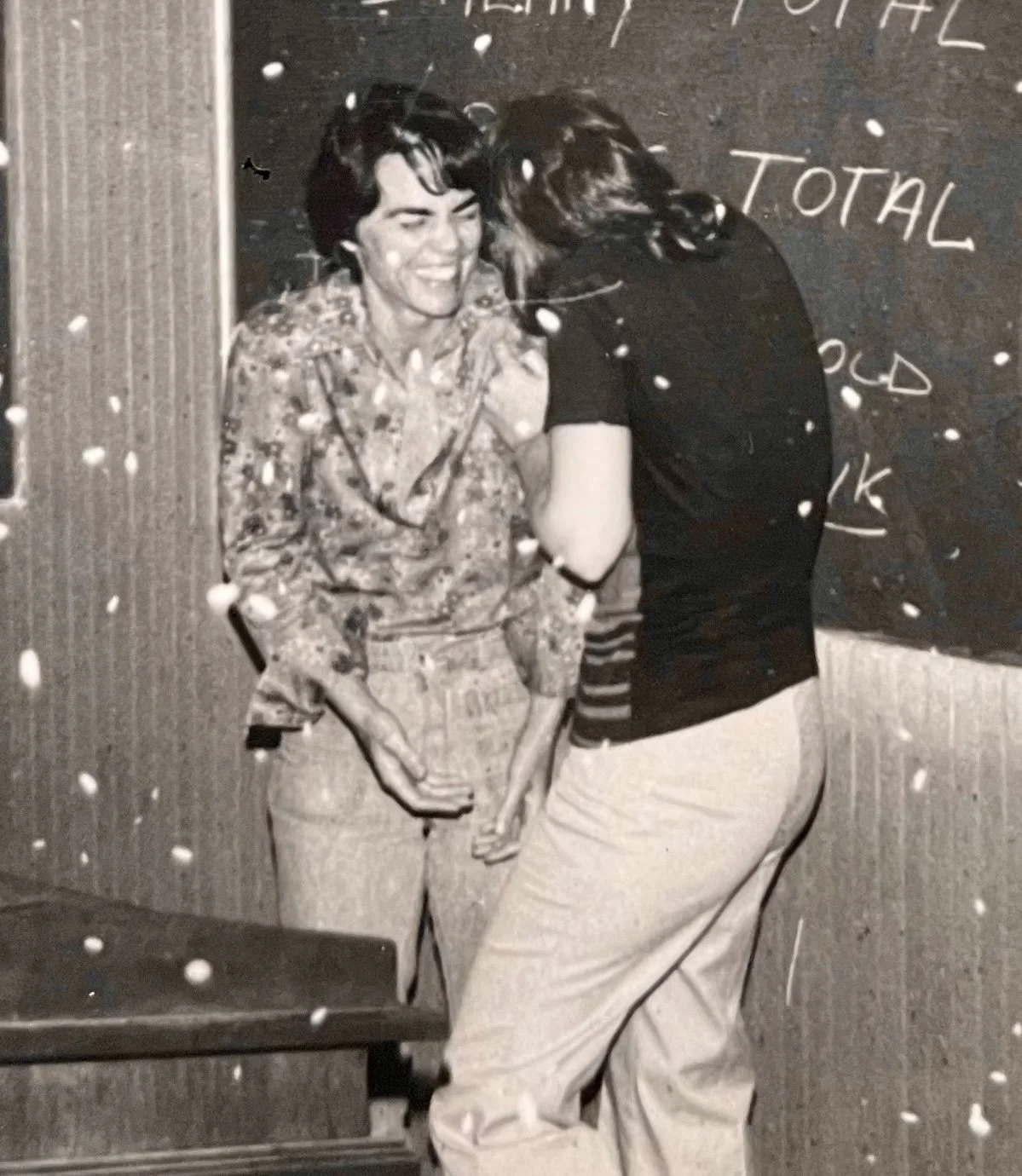

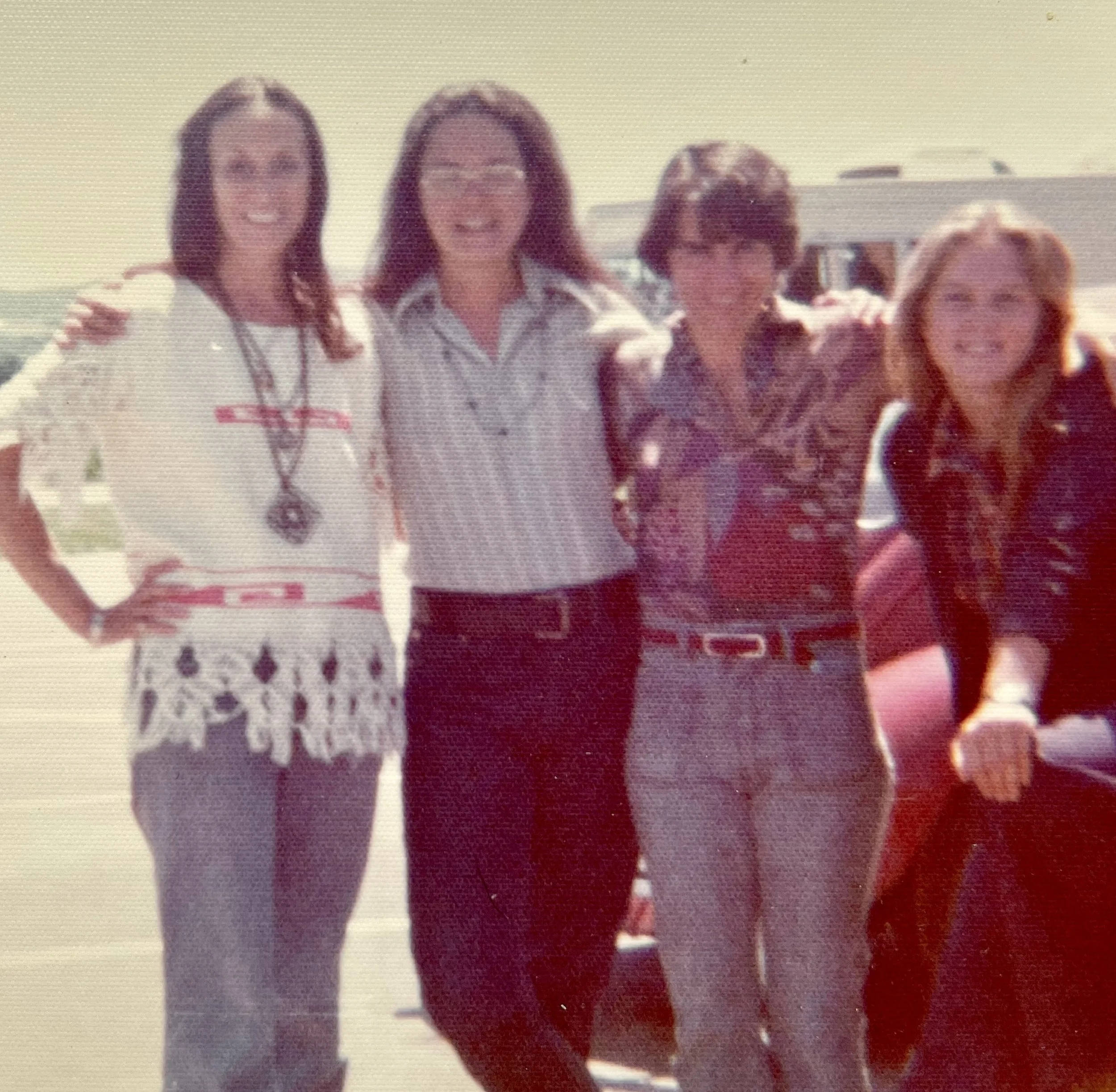
Above - top to bottom
Rita Mae Brown (left), author of Rubyfruit Jungle, and Elaine Noble, the first openly LGBTQ+ person to serve in a state legislature, showered with confetti in celebration of their partnership.
The late Karen Clark, who would go on to serve as a Minnesota state representative for 38 years. She championed LGBTQ+ rights, affordable housing, workers’ rights, environmental justice, and countless other causes.
In 1975 Judith (second from left) attended the National Women's Political Caucus with the friends she made at Sagaris.
At Skidmore College in the 1970s and ’80s, Judith lived openly as a lesbian and taught and wrote about feminism and lesbian-focused issues. Surrounded by conservative men, she was denied tenure, despite being hired on a tenure-track contract, and started to drink heavily. In 1981 she started to attend Alcoholics Anonymous meetings and began her road to recovery.
From 1978 to 1982, Judith and her then-partner, Maureen Brady, founded and ran Spinsters Ink, a feminist press. It was also where Judith found herself in the company of some of the era’s most influential feminist, lesbian writers, including her close friends Michelle Cliff, Barbara Deming, Adrienne Rich, and Audre Lorde. Lorde used the press to publish The Cancer Journals.

Spinsters Ink’s original logo, created by artist Harmony Hammond, inspired by Mary Daly’s definition of a spinster: “A Spinster, of course, is a woman who spins. This is its primary definition. To spin has many meanings, you know. All great Goddesses spin and weave. To spin, to whirl and twirl, to reverse, to spin on one's heel, to turn everything upside down—so we don't always have to look for brand new words: this is creation.” Sinister Wisdom, issue 6, 1977.
While they led Spinsters Ink, Judith and Maureen built relationships with other independent, women-run presses, including Firebrand Books, Persephone Press, and Kitchen Table Press. Together, these women learned from each other, shared resources, and built a feminist publishing network outside the mainstream industry.
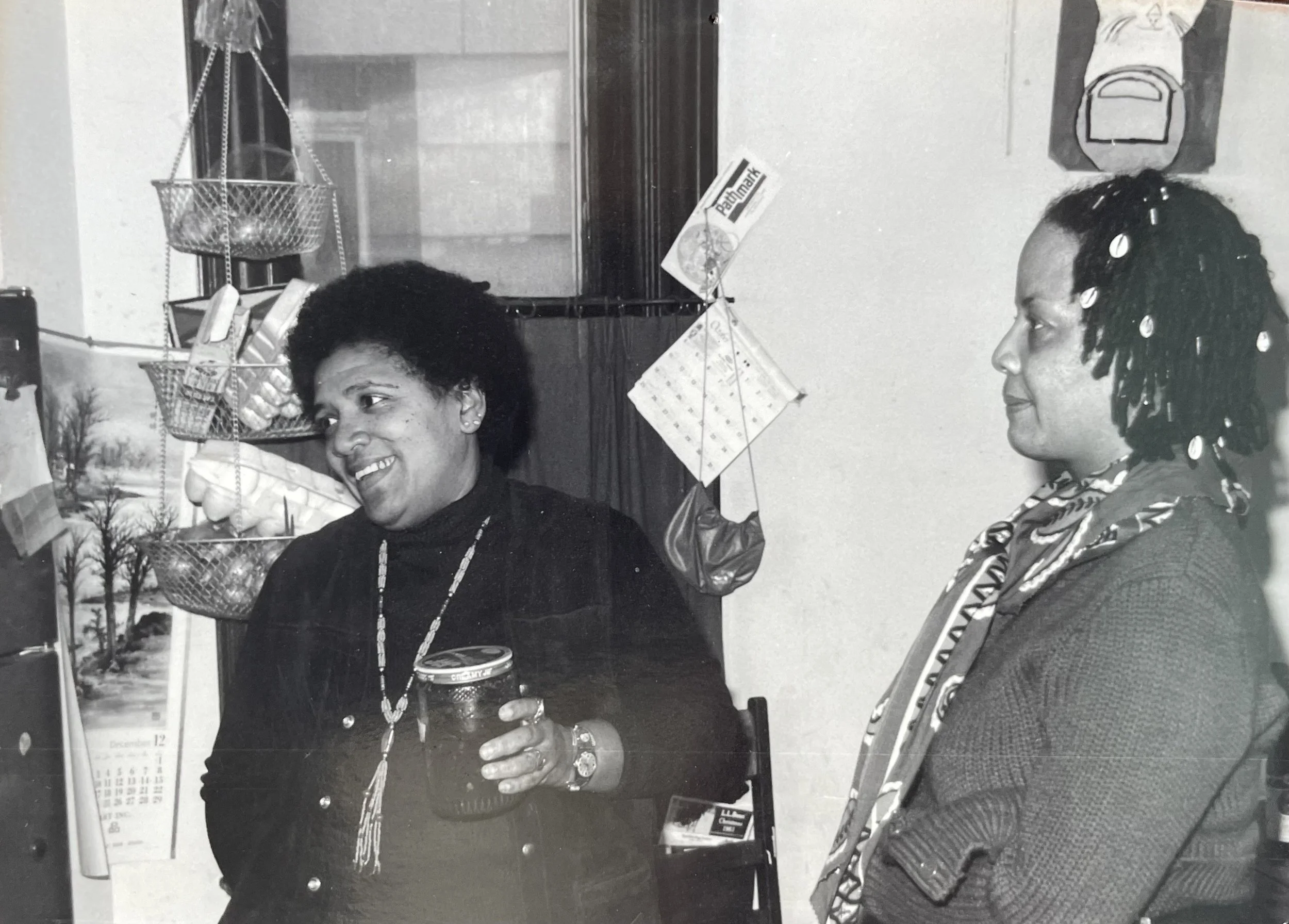
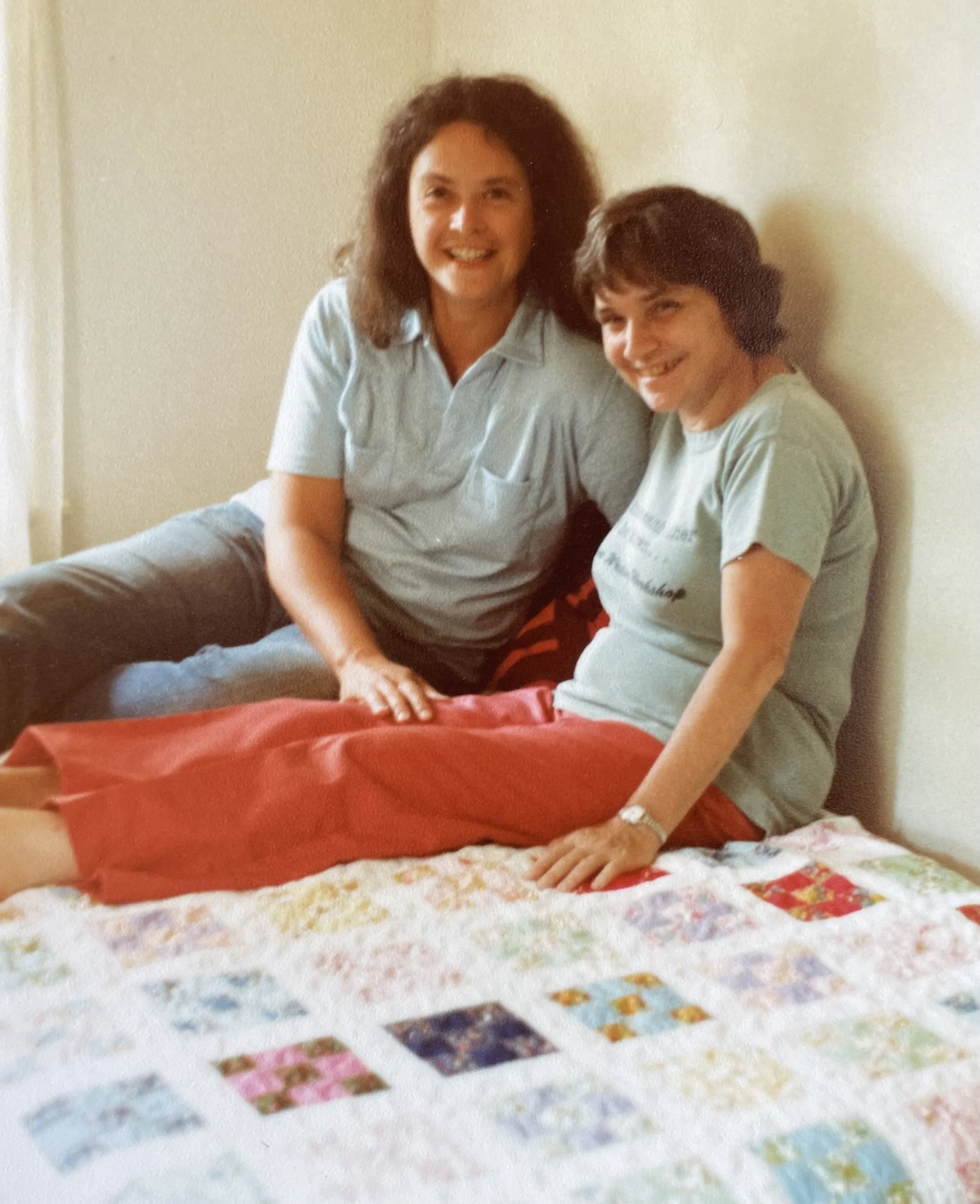
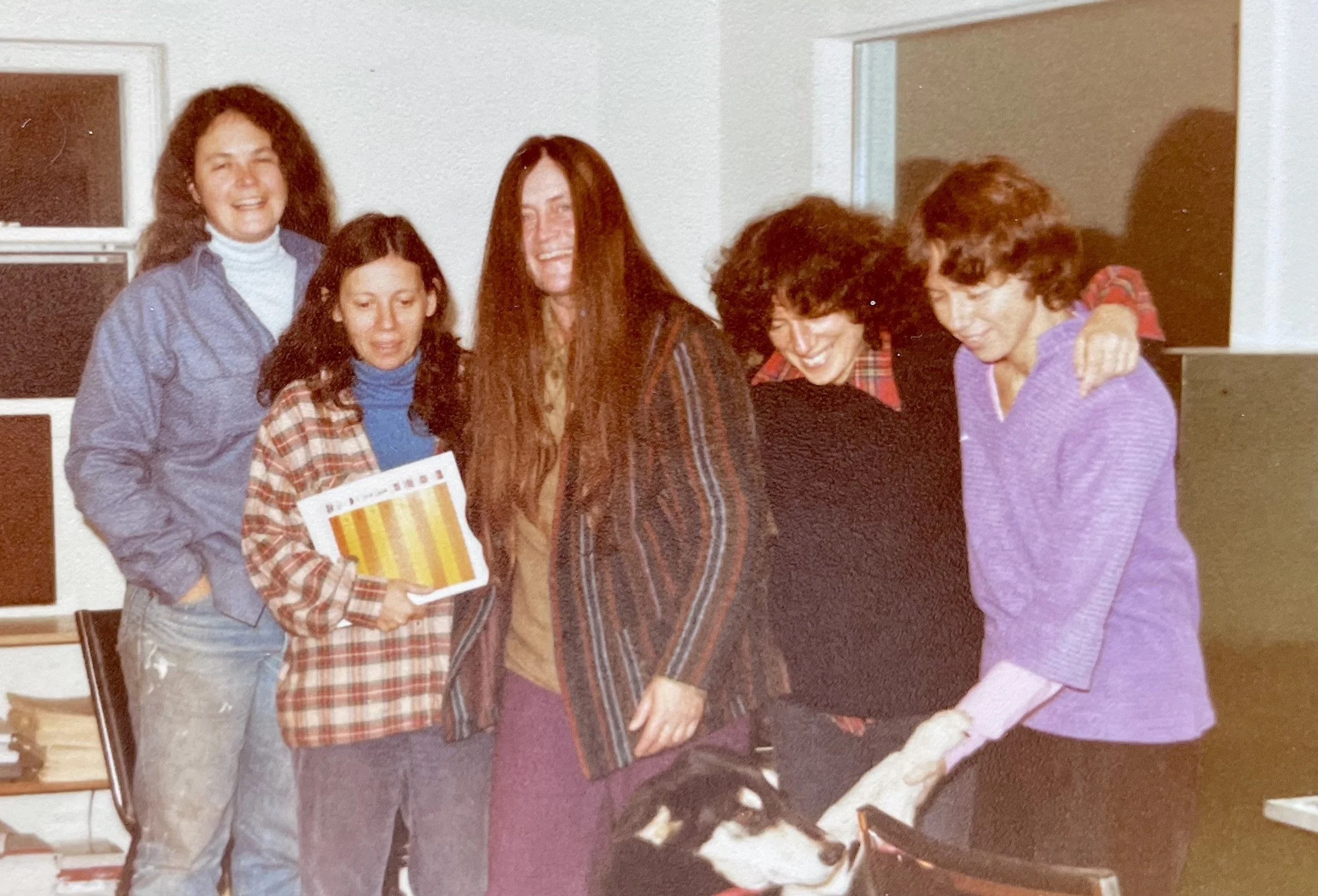
Above - top to bottom
Audre Lorde and Hattie Gossett (playwright, activist, and poet) in Audre’s kitchen in Staten Island during a gathering of feminist presses.
Judith with Adrienne Rich on a quilt sewn by Judith’s grandmother.
Judith, Irena Klepfisz (author, academic, and activist), Judy Waterman (artist), Bernie Mennis (writer and teacher), and her partner, Ann Blanchard.
Peace, Protest, and Human Rights
1980s –Present
Judith’s activism continued to take her into some of the defining political struggles of the 1980s and ’90s. She joined the Women’s Peace Encampment at the Seneca Army Depot, protesting the storage and deployment of nuclear weapons, and traveled to Nicaragua with Witness for Peace. Volunteers entered conflict zones to document human rights abuses, deter violence, and return to the U.S. to advocate against U.S. intervention in the region. During her 1985 trip, Judith’s group was fired upon and captured by the Contras, an experience that forced her to confront the human cost of U.S. foreign policy firsthand.
She continued this work internationally, traveling to Beijing in 1995 as a representative of the American Friends Service Committee for the Fourth UN World Conference on Women, where she participated in workshops addressing women’s rights and human rights. Today, Judith continues to fight for justice.
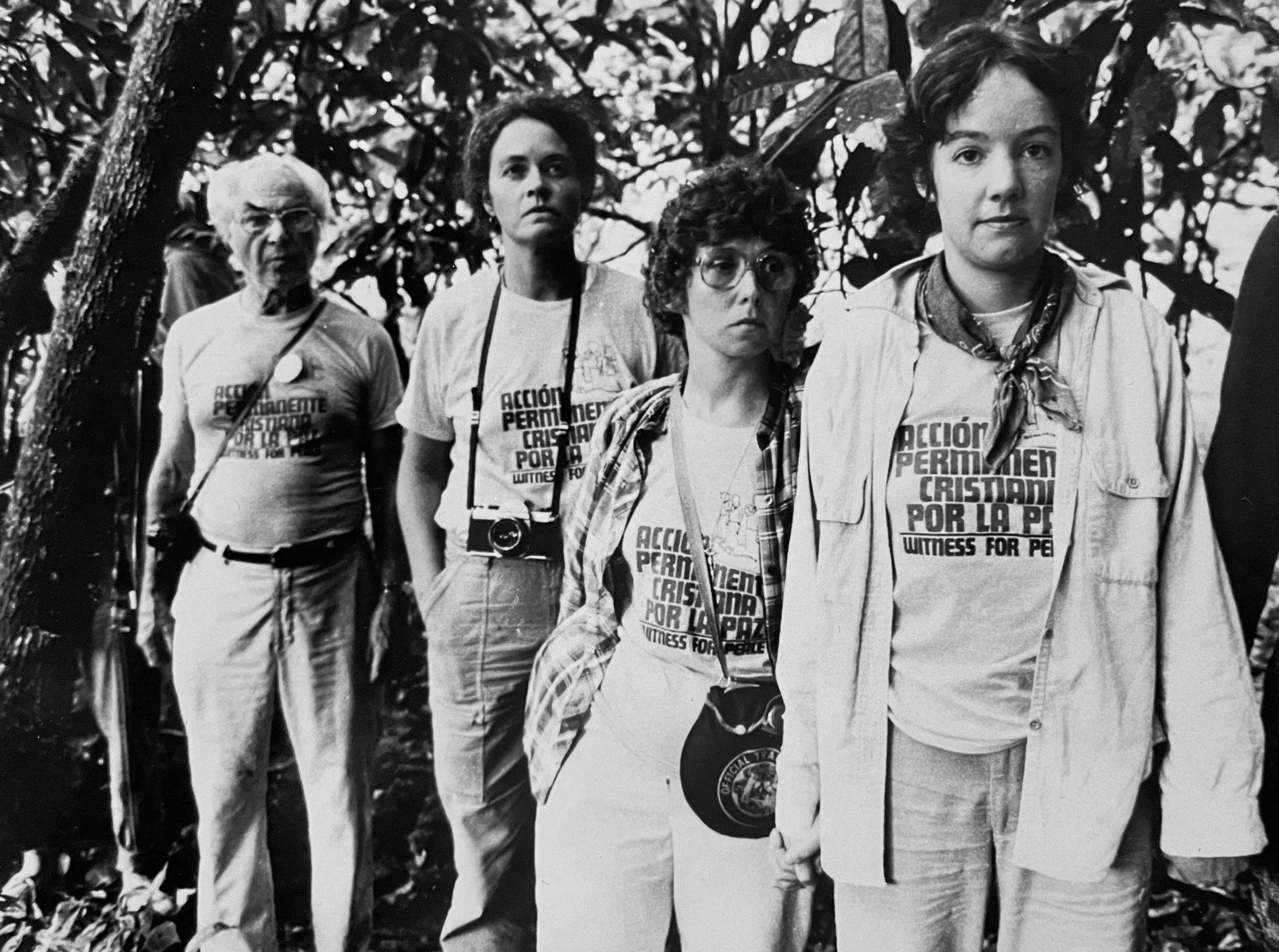
Judith and other Witness for Peace volunteers during their captivity. Judith is second from the left. Taken in 1985.
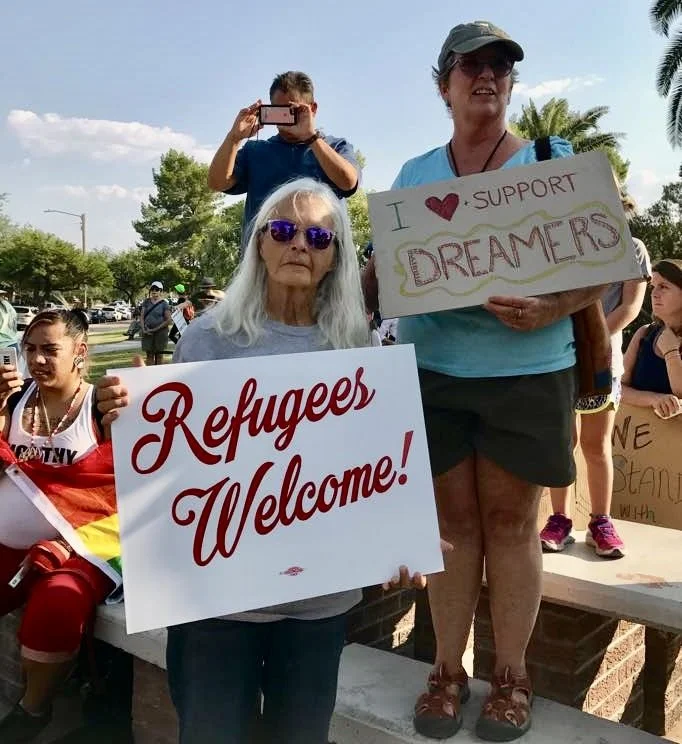
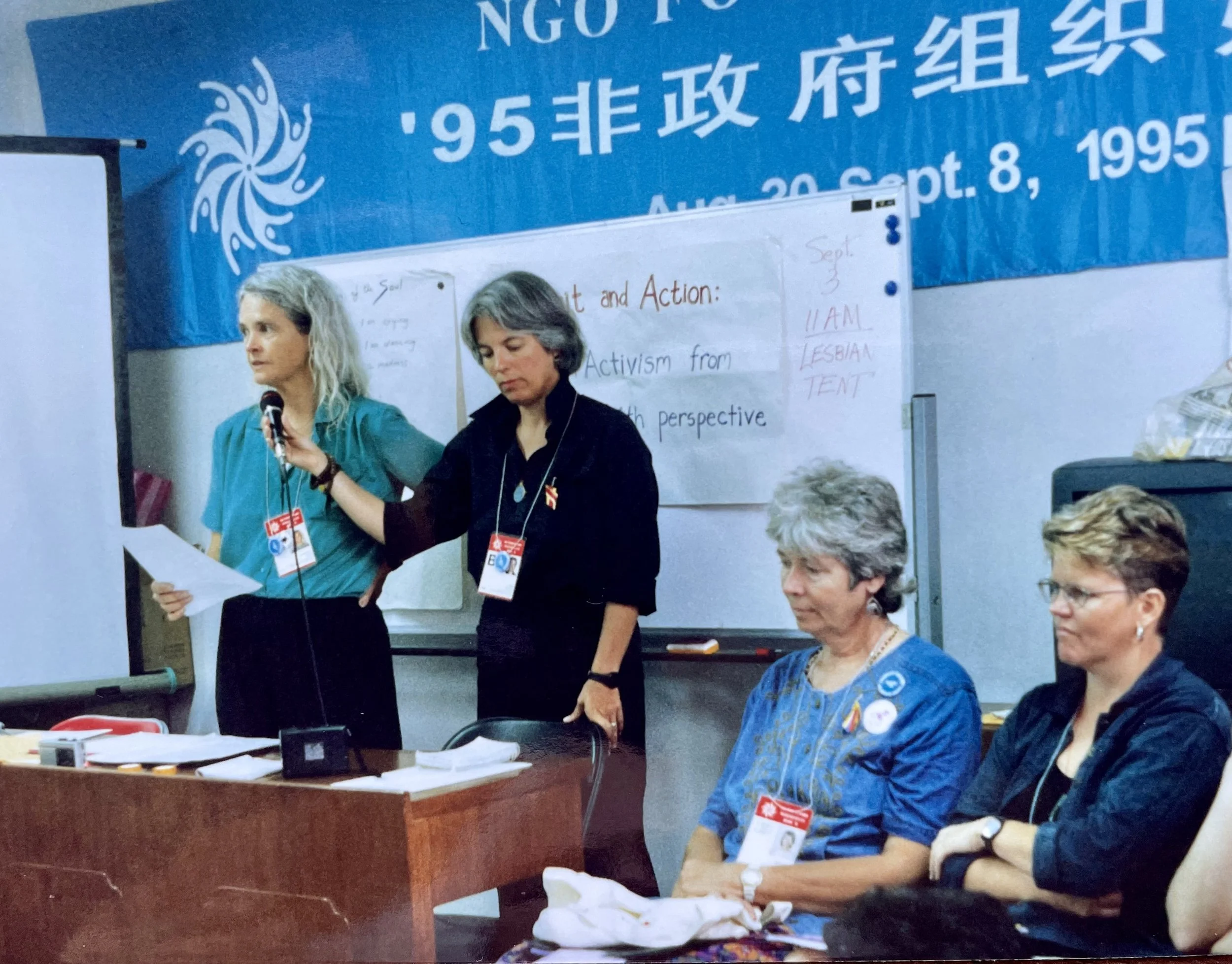
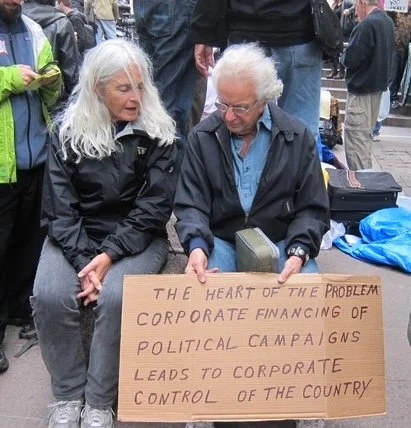
Above - top to bottom
Judith at a protest in Tucson, 2017 in response to Trump’s Muslim ban.
Judith, Victoria Rue (playwright and activist), Sandy Boucher (writer, feminist, Buddhist leader), and Selisse Berry (founder of Out & Equal Workplace Advocates) at the 1995 Fourth World Conference on Women, in Beijing, China.
Judith and her friends protesting with the Occupy Wall Street movement, Zucotti Park in New York, 2011.
Marriage, Law, and New Beginnings
2000s-present
In 2004, Judith and her partner, Jan Schwartz, married in Provincetown, Massachusetts, just as the state became the first in the country to legalize same-sex marriage. That same year, at age 60, Judith began another unexpected chapter: law school. Returning to the classroom as a student, she embraced the challenge of learning an entirely new discipline, earning her law degree and bringing together her decades of teaching and activism with a new focus on law and social change. She went on to teach courses on women and the law, human rights, gender and international security, and the relationship between law and social change. As a lawyer, she also worked on complaint and investigative processes, including Title IX and other gender-discrimination matters.
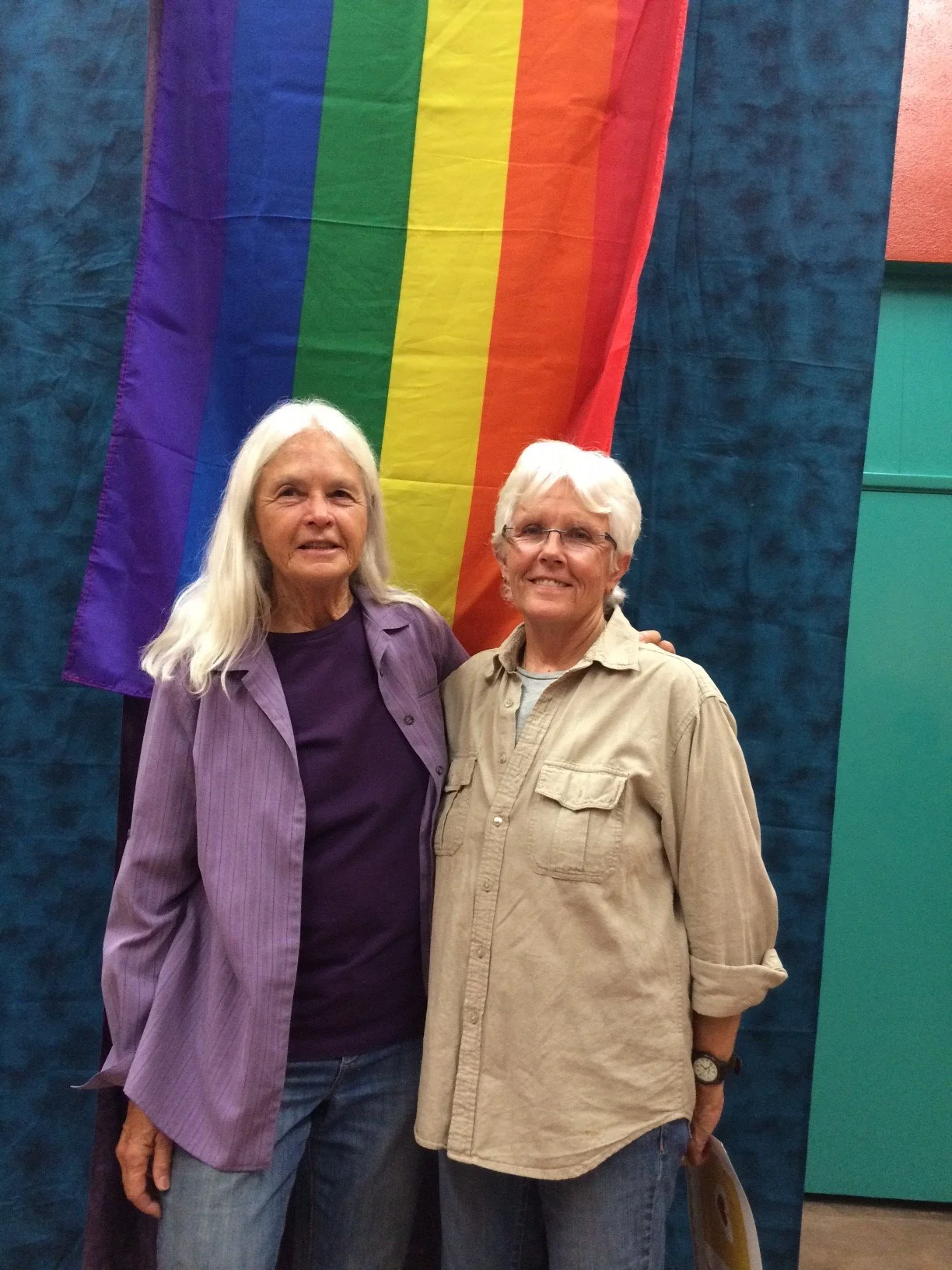
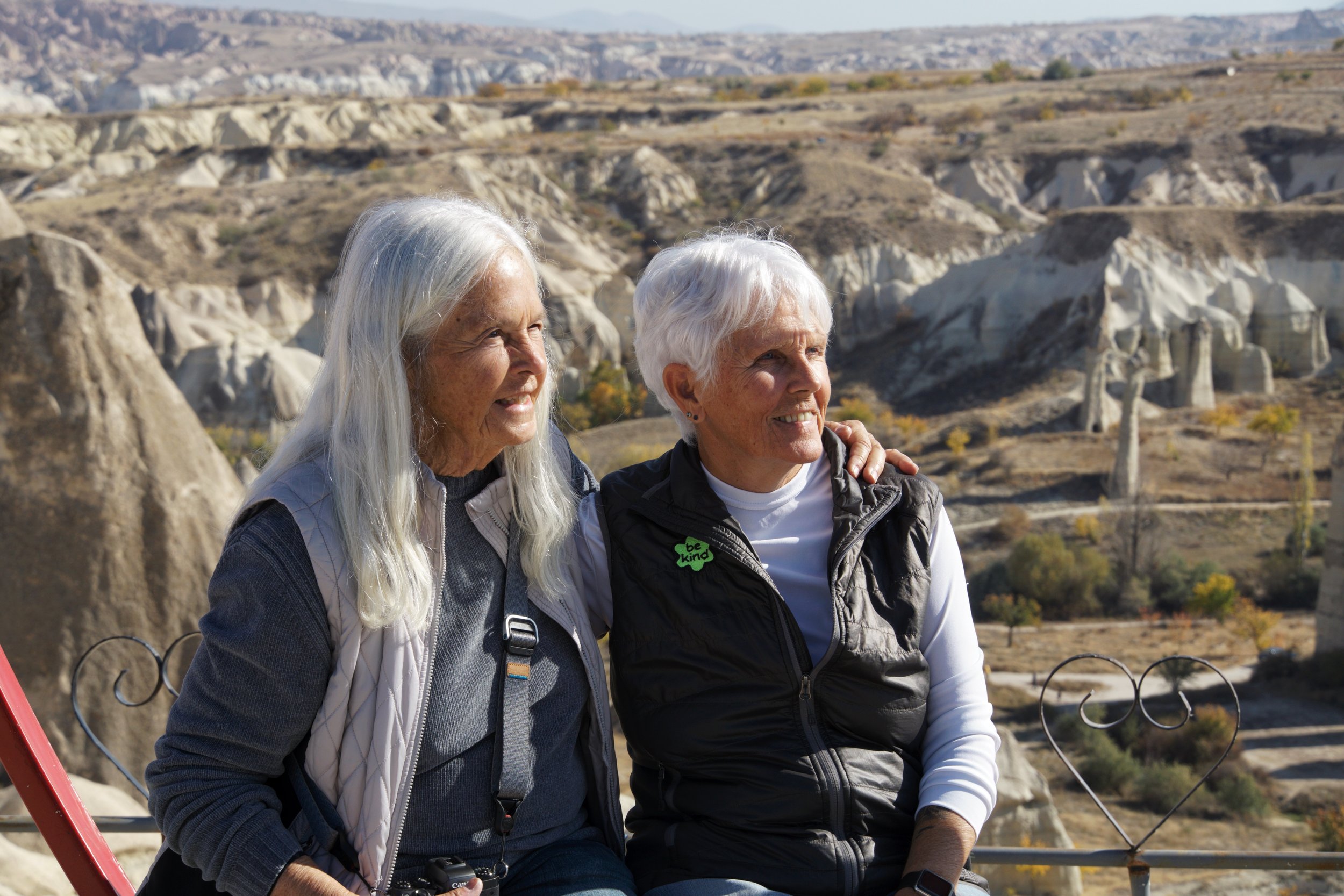
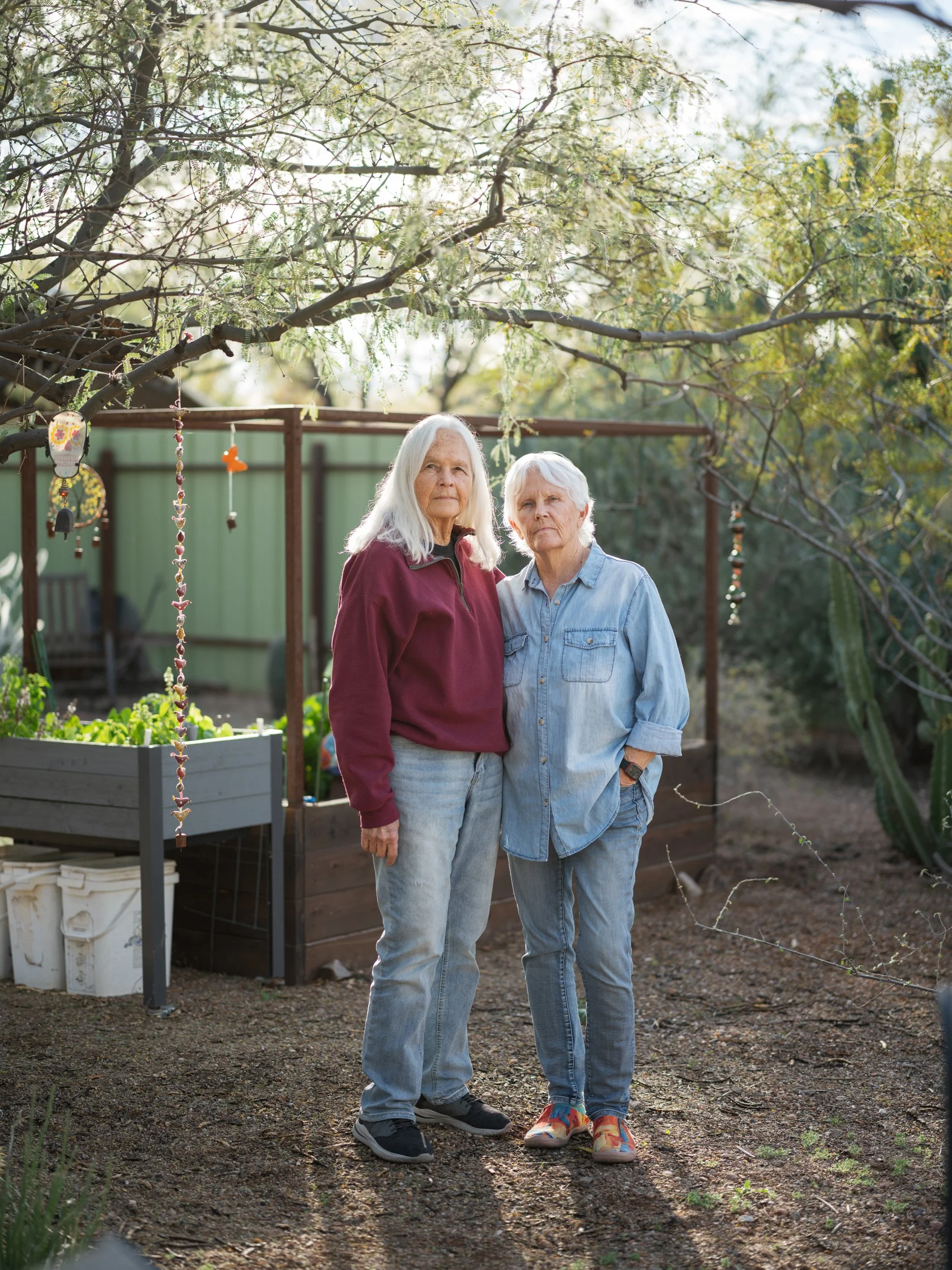
Judith and her partner, Jan. Bottom credit: Todd Danforth.